
Ray Bradbury’s chilling tale, often found as a readily available PDF, presents a dystopian future where technological advancements ironically lead to societal disconnection and control.
Overview of Ray Bradbury and His Works
Ray Bradbury (1920-2012) was a prolific American science fiction, fantasy, horror, and mystery writer, celebrated for his lyrical prose and insightful social commentary. Though frequently associated with science fiction, Bradbury himself preferred the term “imaginative fiction,” emphasizing the human element within his speculative narratives. His works, including classics like Fahrenheit 451 and The Martian Chronicles, often explore themes of censorship, conformity, and the dangers of unchecked technological progress.
Bradbury’s writing style is characterized by vivid imagery, poetic language, and a deep understanding of human psychology. Many of his stories, like “The Pedestrian” – frequently accessed as a PDF for study – serve as cautionary tales, prompting readers to consider the potential consequences of societal trends. He published over 600 works, demonstrating a remarkable creative output and enduring influence on literature and popular culture.
Context of the Story’s Publication (1953)
Published in 1953, “The Pedestrian” emerged during a period of significant societal shifts in post-war America. The rise of television ownership was rapidly transforming leisure habits, fostering a more home-centered culture. Simultaneously, anxieties surrounding the Cold War and the potential for technological control were prevalent. Ray Bradbury’s story reflects these concerns, portraying a future where passive entertainment dominates and individuality is suppressed.
The story’s publication coincided with a growing consumer culture and a fascination with automation. Accessing the story today, often as a readily available PDF, allows a modern audience to appreciate its prescient commentary on the potential downsides of technological dependence. Bradbury tapped into the anxieties of his time, crafting a narrative that continues to resonate with contemporary readers.

Plot Summary
The story, easily found as a PDF, follows Leonard Mead’s nightly walks in a deserted city, contrasted by the glowing screens within every home.
Initial Walk and Description of the City
The narrative, frequently accessed as a PDF, begins with Leonard Mead embarking on his evening walk, a practice that sets him apart in this futuristic society. Bradbury meticulously paints a picture of a city utterly devoid of pedestrian traffic; the streets are eerily silent and dark. Homes glow with the bluish light emanating from television screens, indicating the inhabitants are lost in passive entertainment.
This stark contrast between Mead’s active engagement with the world and the citizens’ sedentary lifestyle is immediately apparent. The city, once a vibrant hub of activity, has transformed into a ghost town, dominated by the hypnotic allure of technology. The description emphasizes the unsettling emptiness and the pervasive sense of isolation that has gripped the community, a key element explored within the PDF version of the story.
Encounters with Empty Homes and Television Light
As Leonard Mead continues his walk – readily available for study in the PDF format – he passes house after house, each radiating the cold, blue glow of television screens. These aren’t welcoming lights, but rather indicators of vacant minds absorbed in manufactured realities. He observes no movement, hears no voices, only the flickering illumination suggesting life within, yet devoid of genuine connection.
Bradbury emphasizes the uniformity of this experience, highlighting how every home is consumed by the same passive entertainment. Mead’s attempts to peer into windows are met with only the reflected images of programs, symbolizing the citizens’ detachment from the outside world. This recurring motif, prominent in the PDF, underscores the story’s central theme of isolation and the dangers of technological dependence.
The Arrival of the Robotic Police Car
The unsettling climax, detailed within the accessible PDF version of the story, arrives with the silent approach of the police car. Unlike any vehicle Mead has previously encountered, this one is devoid of a human presence – a chrome, automated enforcer of societal norms. Its arrival isn’t heralded by sound, but by a chilling, mechanical voice questioning Mead’s unusual behavior.
Bradbury masterfully builds suspense, portraying the car as a symbol of oppressive control. The robotic nature of the police force, clearly outlined in the PDF, emphasizes the story’s critique of a future where technology replaces human interaction and judgment. Mead’s bewilderment and the car’s cold interrogation highlight the dehumanizing effects of this technological dominance.
Mead’s Arrest and the Psychiatric Center
The culmination of Mead’s unsettling walk, readily apparent when reading the PDF version, is his abrupt arrest by the robotic police car. Deemed a suspicious character simply for walking and enjoying the night air, Mead is taken into custody. The car’s chilling pronouncement reveals his destination: the Psychiatric Center for Research on Regressive Tendencies.
This final twist, detailed in the PDF, underscores Bradbury’s central theme of nonconformity being equated with mental illness. The story suggests a society where independent thought and a preference for real-world experience are considered deviations needing correction. Mead’s fate serves as a stark warning about the dangers of unchecked technological control and societal homogenization.

Character Analysis
Analyzing characters within the readily accessible PDF reveals Mead as an individualist, contrasting sharply with a society consumed by passive entertainment and robotic enforcement.
Leonard Mead: The Protagonist
Leonard Mead, the central figure in Ray Bradbury’s “The Pedestrian” – easily found as a PDF – is a compelling anomaly in a future obsessed with televised entertainment. He actively chooses to walk the deserted city streets each night, engaging with the world directly, a stark contrast to the indoor lives of his neighbors.
Mead’s simple act of walking signifies his individuality and a yearning for genuine human connection. He’s portrayed as a harmless eccentric, a man out of step with his time. This deliberate nonconformity ultimately marks him as suspicious in the eyes of the automated police system. His preference for experiencing life firsthand, rather than through a screen, positions him as a symbol of lost humanity within Bradbury’s cautionary tale.
The Robotic Police Car: Symbol of Authority
The robotic police car in Ray Bradbury’s “The Pedestrian” – widely accessible as a PDF – embodies the chilling extension of technological control and the erosion of human judgment. It represents a detached, impersonal authority, devoid of empathy or understanding. This automated enforcer doesn’t question; it simply reacts to deviations from the norm.
Its arrival isn’t heralded by human presence, but by a cold, mechanical voice and a glaring beam of light, highlighting the story’s theme of surveillance. The car’s very existence suggests a society where independent thought and behavior are viewed as threats. It’s a powerful symbol of a future where technology dictates societal norms and suppresses individuality, ultimately arresting Mead for simply being different.

Themes Explored in “The Pedestrian”
Ray Bradbury’s impactful story, often read as a PDF, delves into themes of technological dependence, isolation, and the suppression of individuality in a controlled society.
The Dangers of Technological Dependence
Ray Bradbury’s “The Pedestrian,” frequently accessed as a PDF, powerfully illustrates the perils of unchecked technological advancement. The story depicts a future where citizens are utterly consumed by passive entertainment – television – neglecting genuine human connection and outdoor experiences. This complete immersion robs individuals of their humanity, transferring power to machines.
The narrative suggests that over-reliance on technology fosters a culture of isolation and loneliness, as people prioritize the simulated world over real-life interactions. Bradbury warns that such dependence can lead to a loss of critical thinking and independent thought, ultimately diminishing what it means to be human. The story serves as a cautionary tale, prompting reflection on our own relationship with technology and its potential consequences.
Isolation and Loneliness in a Futuristic Society
Ray Bradbury’s “The Pedestrian,” easily found as a PDF, paints a stark picture of a future defined by profound isolation. The story reveals a society where individuals are physically present but emotionally detached, lost within the glow of their television screens. Leonard Mead’s nightly walks highlight his alienation; he is the anomaly, the only person choosing to engage with the real world.
This pervasive loneliness stems from the dominance of technology, which replaces genuine human interaction with passive entertainment. Bradbury suggests that this technological immersion creates a culture where connection is superficial and empathy diminishes. The emptiness of the homes Mead passes underscores the story’s central theme: a society disconnected from itself and its surroundings;
The Importance of Individuality and Nonconformity
Ray Bradbury’s “The Pedestrian,” widely accessible as a PDF, champions the value of individuality in a world striving for conformity. Leonard Mead’s simple act of walking – a deliberate rejection of the dominant, screen-bound culture – positions him as an outsider. He embodies nonconformity, choosing genuine experience over passive consumption.
Bradbury suggests that a society obsessed with uniformity stifles creativity and critical thought. Mead’s arrest isn’t for committing a crime, but for being different. The robotic police car represents the enforcement of societal norms, punishing those who deviate. The story powerfully argues for the necessity of independent thought and the courage to resist societal pressures, even in the face of technological control.
Control and Surveillance
Ray Bradbury’s “The Pedestrian,” easily found as a PDF, vividly portrays a future defined by pervasive control and surveillance. The robotic police car isn’t a protector, but an instrument of societal regulation, patrolling for deviations from the norm. Its impersonal inquiry – “What are you doing?” – highlights the erosion of privacy and individual freedom.
The story implies a society where every citizen’s activity is monitored, and nonconformity is swiftly punished. The absence of other pedestrians suggests a population willingly immersed in passive entertainment, effectively self-policing. Bradbury warns against the dangers of unchecked technological power, demonstrating how it can be used to suppress individuality and enforce absolute control over citizens’ lives.

Symbolism and Imagery
Analyzing the “Pedestrian” PDF reveals potent symbolism: darkness embodies societal stagnation, while Mead’s walk signifies a yearning for authentic human connection and freedom.
The City as a Representation of Conformity
Within Ray Bradbury’s “The Pedestrian,” readily accessible as a PDF, the city isn’t merely a setting but a stark symbol of oppressive conformity. The uniformly lit homes, each glowing with television screens, represent a population utterly absorbed in passive entertainment and devoid of independent thought.
Bradbury paints a picture of streets eerily deserted, highlighting the absence of genuine human interaction. This emptiness isn’t accidental; it’s a deliberate illustration of a society where individuality is suppressed and replaced by a collective, screen-induced stupor. The city, therefore, embodies a chilling vision of a future where conformity reigns supreme, and deviation from the norm is met with suspicion and control. It’s a world where simply walking becomes a subversive act.
Television as a Symbol of Passive Entertainment
In Ray Bradbury’s “The Pedestrian,” easily found as a PDF, television functions as a potent symbol of numbing, passive entertainment and societal control. The story depicts a future where citizens are perpetually glued to their screens, lost in a world of manufactured realities. This constant bombardment of media effectively renders them incapable of independent thought or genuine human connection.
Bradbury critiques the potential for television to isolate individuals and stifle creativity. The glowing windows of the homes represent a collective escape from reality, a shared delusion that reinforces conformity. Television isn’t simply a source of amusement; it’s a tool of social control, keeping the population docile and compliant, ultimately robbing them of their humanity.
The Darkness and Silence of the Streets
Within Ray Bradbury’s “The Pedestrian,” accessible as a PDF, the pervasive darkness and unsettling silence of the city streets are crucial elements establishing the story’s dystopian atmosphere. These aren’t merely atmospheric details; they symbolize the absence of life, community, and genuine human interaction. Mead’s solitary walks highlight this emptiness, emphasizing his status as an anomaly in a society consumed by indoor entertainment.
The lack of pedestrian traffic and the quietude underscore the extent to which people have retreated into their homes, captivated by their television screens. This silence isn’t peaceful; it’s oppressive, hinting at a loss of freedom and individuality, a world where conformity reigns supreme and independent thought is discouraged.
Nature as a Contrast to the Artificial World
In Ray Bradbury’s “The Pedestrian,” readily available as a PDF, nature serves as a poignant counterpoint to the sterile, technologically dominated urban landscape. Leonard Mead finds solace and a sense of connection in his nightly walks, drawn to the natural world – the wind, the smells of grass, and the sounds of crickets. This connection highlights his individuality and rejection of the passive, screen-bound existence embraced by the majority.
Bradbury’s vivid descriptions of nature emphasize its beauty and vitality, contrasting sharply with the cold, artificial glow of television screens and the mechanical precision of the robotic police car. Nature represents freedom, authenticity, and a connection to something larger than oneself, all absent within the city’s confines.

Literary Devices
Bradbury masterfully employs vivid imagery throughout “The Pedestrian” (often accessed as a PDF), alongside foreshadowing and a straightforward chronological plot structure.
Bradbury’s Use of Vivid Imagery
Ray Bradbury, even within the concise format of “The Pedestrian” – frequently encountered as a downloadable PDF – demonstrates exceptional skill in crafting evocative imagery. He contrasts the sterile, illuminated interiors of homes consumed by television with the profound darkness and silence of the deserted streets.
This stark juxtaposition isn’t merely descriptive; it’s integral to the story’s thematic weight. The natural world, though minimal, is presented with a beauty and power that sharply contrasts the artificiality dominating society, offering Leonard Mead a fleeting sense of solace.
Bradbury’s detailed descriptions aren’t simply window dressing; they actively contribute to the story’s unsettling atmosphere and underscore the loss of genuine human connection in this technologically-saturated future.
Foreshadowing and Suspense
Even within the short length of “The Pedestrian” – easily accessible as a PDF – Ray Bradbury masterfully builds suspense and employs subtle foreshadowing. The initial description of the eerily empty city, devoid of human presence, immediately establishes a sense of unease.
Mead’s solitary walks, repeatedly highlighted, foreshadow his eventual alienation and conflict with the automated societal norms. The robotic police car’s arrival isn’t a sudden shock, but rather a logical, albeit chilling, consequence of his nonconformity.
Bradbury’s deliberate pacing and withholding of information amplify the tension, leaving the reader anticipating a confrontation and questioning the nature of this futuristic world.
The Chronological Plot Structure
“The Pedestrian,” readily available as a PDF, adheres to a straightforward chronological plot structure, enhancing its impact. Ray Bradbury presents events in the order they occur during Leonard Mead’s nightly walk. The story begins with Mead embarking on his routine, then details his observations of the vacant city and illuminated homes.
This linear progression builds tension as Mead’s isolation becomes increasingly apparent. The encounter with the robotic police car and his subsequent arrest unfold sequentially, culminating in his transport to the psychiatric center.
This simple structure focuses attention on the story’s themes and Mead’s plight, rather than complex narrative twists.

Social Commentary
Bradbury’s “The Pedestrian” (often accessed as a PDF) critiques 1950s American culture, predicting technology’s isolating influence and the dangers of passive entertainment.

Critique of 1950s American Culture
Ray Bradbury’s “The Pedestrian,” frequently encountered as a downloadable PDF, serves as a potent critique of the burgeoning consumerism and conformity prevalent in 1950s America. The story subtly condemns the increasing obsession with television, portraying it not as a source of connection, but as a tool for societal pacification and isolation.
Bradbury observed a shift towards passive entertainment, where individuals retreated into their homes, captivated by the glowing screens, neglecting genuine human interaction and the natural world. This critique extends to the standardization of leisure, where individuality was suppressed in favor of collective, screen-based experiences. The story’s depiction of empty streets and illuminated windows highlights a society willingly surrendering to a manufactured reality, a chilling commentary on the potential consequences of unchecked technological advancement and cultural homogenization.
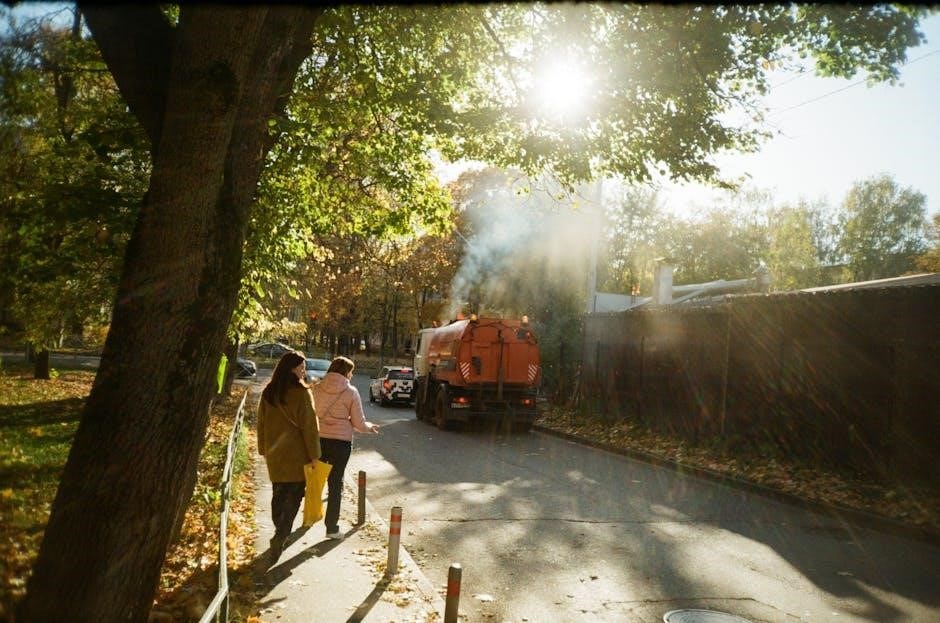
Predictions About the Future of Technology and Society
Ray Bradbury’s “The Pedestrian,” easily accessible as a PDF, remarkably foreshadows several anxieties about the future of technology and its impact on society. The story anticipates a world dominated by passive entertainment, where individuals become increasingly detached from reality and reliant on machines for stimulation.
Bradbury’s vision of robotic law enforcement, embodied by the police car, predicts the potential for automated surveillance and control. He accurately foresaw the potential for technology to erode individuality and critical thinking, creating a society of compliant, isolated citizens. The narrative serves as a cautionary tale, warning against the uncritical embrace of technological progress and its potential to diminish human connection and autonomy, a prescient observation even today.
Bradbury’s “The Pedestrian,” often read as a PDF, remains powerfully relevant, prompting reflection on technology’s role in shaping human connection and freedom.
The Enduring Relevance of “The Pedestrian”
Ray Bradbury’s “The Pedestrian,” easily accessible as a PDF today, continues to resonate deeply with contemporary audiences, despite being penned in 1953. Its exploration of technological dependence, isolation, and the suppression of individuality feels increasingly prescient in our hyper-connected, screen-saturated world. The story serves as a cautionary tale, prompting us to consider the potential consequences of prioritizing passive entertainment over genuine human interaction and independent thought.

The narrative’s power lies in its subtle yet unsettling depiction of a society willingly surrendering to conformity. As we navigate an era defined by constant surveillance and algorithmic control, Mead’s plight—his arrest for simply walking—becomes a stark reminder of the importance of safeguarding personal freedoms and embracing nonconformity. The story’s enduring appeal confirms Bradbury’s genius in anticipating and articulating anxieties that remain profoundly relevant.